For years, the promise of the self-driving car has felt like a horizon that recedes just as you approach it. We were promised robotaxis by 2020; instead, we got impressive but cautious driver-assist systems that still panic when a plastic bag drifts across the highway, or a construction worker waves a confusing hand signal.
But walking through the neon-lit halls of CES 2026 this week, it feels as though the industry has finally stopped trying to teach cars to follow a script and started teaching them how to think.
At the center of this shift is NVIDIA. On Monday, the silicon giant’s CEO, Jensen Huang, stood before a packed crowd to unveil Alpamayo, a new family of open-source AI models designed to give autonomous vehicles (AVs) something they’ve desperately lacked: common sense.
Moving Beyond the Script
To understand why Alpamayo matters, you have to understand why self-driving cars currently struggle. Traditional autonomous systems are essentially giant "if-then" machines. If the light is red, then stop. If a pedestrian is in the crosswalk, then wait.
The problem is the "long tail"—those bizarre, one-in-a-million scenarios that engineers can’t possibly program for. A car might know how to handle a stop sign, but does it know how to handle a stop sign being held by a toddler in a Halloween costume?
"The ChatGPT moment for physical AI is here," Huang told the audience. With Alpamayo, NVIDIA is moving away from rigid code and toward what they call Reasoning-Based Autonomy.
What is NVIDIA Alpamayo?
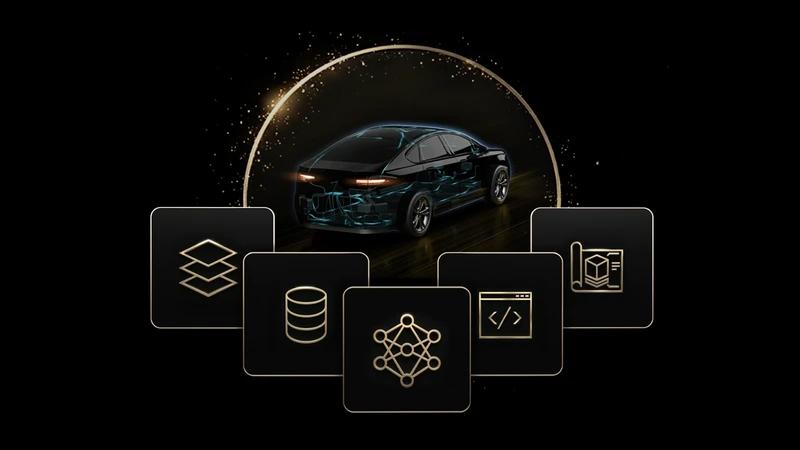
Named after a majestic peak in the Peruvian Andes, Alpamayo isn’t just a single piece of software; it’s a three-pronged ecosystem designed to be the brain, the school, and the library for the next generation of cars.
Alpamayo 1 (The Brain): This is the industry’s first "Vision-Language-Action" (VLA) model. Unlike older systems that just "see" pixels, Alpamayo 1 uses "chain-of-thought" reasoning. It can actually process a video feed and explain its logic in plain language. If it slows down, it’s not just because a sensor tripped; it’s because it "reasoned" that the icy patch ahead required a lower speed to maintain traction.
AlpaSim (The School): You can't train a car on the streets of Manhattan without risking lives. AlpaSim is an open-source simulation framework that allows developers to test these "reasoning" models in a digital world so realistic it’s nearly indistinguishable from reality.
Physical AI Open Datasets (The Library): NVIDIA is releasing over 1,700 hours of diverse driving data. This isn't just footage of sunny suburban streets; it’s a collection of the "long-tail" edge cases—the weird, difficult, and dangerous moments that models need to study to become truly safe.
The Power of "Open"
In a surprising move for a company that often keeps its "secret sauce" under lock and key, NVIDIA is making Alpamayo open-source. By putting the model weights on platforms like Hugging Face and GitHub, they are inviting the entire world—from startups like Uber and Lucid to academic researchers at Berkeley—to poke, prod, and improve the tech.
This transparency is a calculated masterstroke. If the public is ever going to trust a 4,000-pound machine to drive itself at 70 mph, we need to know how it makes decisions. By making the reasoning process "auditable," NVIDIA is providing the transparency that regulators and fearful commuters have been demanding for a decade.
Why This Changes Everything for You
For the average person, Alpamayo won't be a brand you buy at a dealership. Instead, it will be the invisible "reasoning engine" inside your next car.
Imagine a car that doesn't just slam on the brakes when a ball rolls into the street, but one that anticipates a child might be running after it. Imagine a robotaxi that can navigate a chaotic airport drop-off lane not by following a map, but by understanding the social cues of other drivers.
The Road Ahead
We are still in the early days. Alpamayo 1 is a "teacher model"—it’s too big and power-hungry to run on a car’s local computer today. Developers will use it to train smaller, faster versions that fit into the dashboards of future vehicles.
But the message from CES is clear: the era of the "blind" autonomous vehicle is ending. The era of the thinking car has begun. NVIDIA hasn't just built a better sensor; they’ve started to build a digital mind for the road.